

News Summary
The University of Oklahoma has formed a partnership with Wheeler Bio to utilize machine learning for faster monoclonal antibody production. This collaboration showcases OU’s dedication to advancing healthcare through research and innovation. The new machine learning model boasts a 76.2% accuracy rate in selecting high-performing clones, streamlining production timelines and reducing waste. As the demand for monoclonal antibody therapies increases, this partnership is set to significantly impact patient care and contribute to the biomanufacturing industry in Oklahoma.
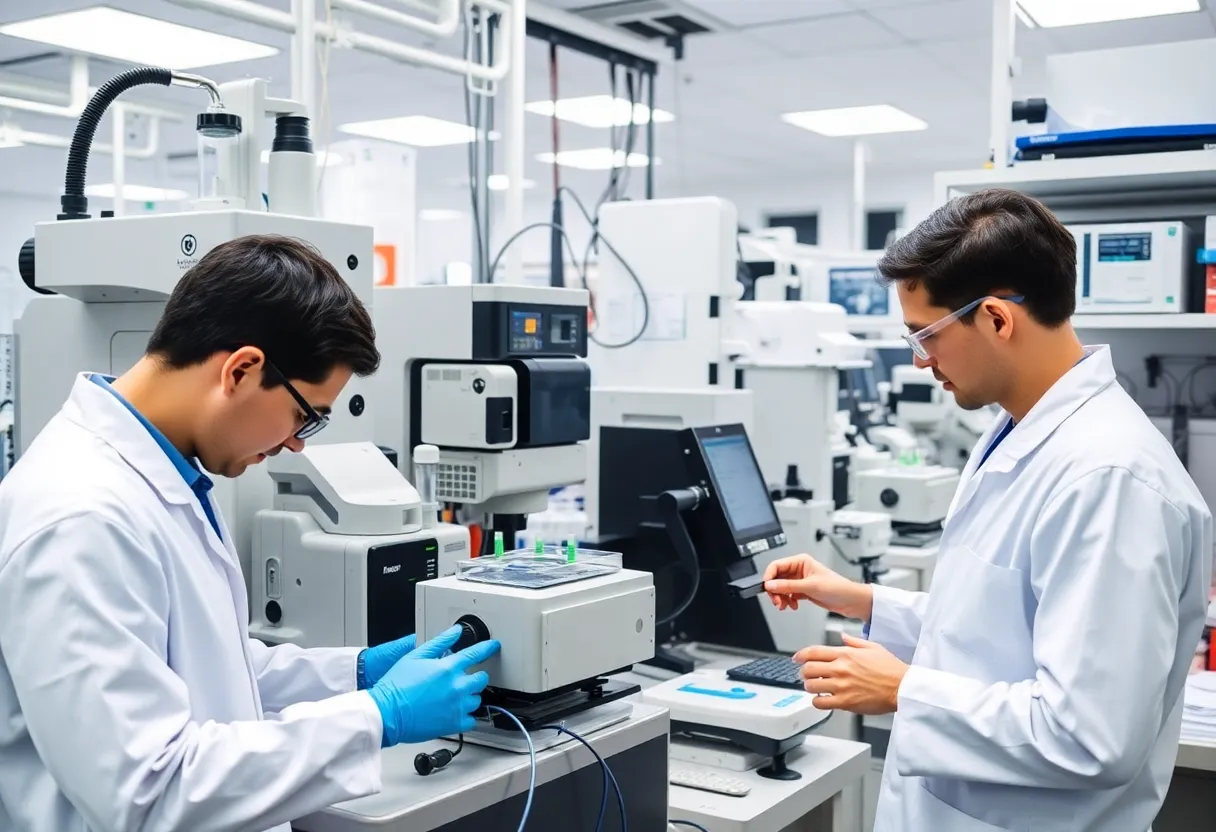
Oklahoma City, OK – The University of Oklahoma (OU) has partnered with Oklahoma City-based Wheeler Bio to leverage machine learning for the accelerated production of monoclonal antibodies, a vital component in combating various diseases. This innovative collaboration underscores OU’s commitment to advancing healthcare through academic and research excellence while contributing significantly to Oklahoma’s growing biotechnology sector.
This collaboration not only highlights the university’s pioneering spirit but also emphasizes its role in fostering technological advancements that directly impact patient care. Monoclonal antibodies have become paramount in the treatment of cancers, autoimmune diseases, and other medical conditions, making the rapid development of these therapies more crucial than ever.
Accelerating Antibody Production
Monoclonal antibodies are lab-created proteins essential for treating diseases such as cancer and autoimmune disorders. Traditionally, the process of selecting productive cell lines for their production has been time-intensive, often spanning several weeks. The new machine learning model developed by OU researchers effectively addresses this challenge by predicting cell productivity early in the production cycle. This allows for quicker identification of high-performing clones, streamlining the overall process.
Key Outcomes of the Collaboration
The partnership with Wheeler Bio, a contract development and manufacturing organization specializing in antibody therapies, provided critical production data that was integrally combined with the Luedeking-Piret model—a mathematical framework used to describe cell growth and protein production. The new machine learning model demonstrates an impressive accuracy rate of selecting higher-performing clones in 76.2% of trials while also forecasting daily production trajectories from days 10 to 16 using just the initial nine days of growth data. This breakthrough not only enhances productivity but reduces waste and associated costs.
Implications for the Biomanufacturing Industry
The successful integration of machine learning in this context showcases the potential for AI to revolutionize biomanufacturing processes by speeding up production timelines significantly. As the demand for monoclonal antibody therapies is anticipated to double by 2030, this advancement could pave the way for more efficient development and distribution of these vital treatments, benefiting patients worldwide with quicker access.
About Monoclonal Antibodies
Engineered to mimic the immune system’s response to various pathogens, monoclonal antibodies have emerged as a cornerstone in modern therapy. With the expected increase in demand for these treatments, more effective production methods will be essential to meet the clinical needs of patients. This partnership exemplifies how academic institutions and industry can work together to enhance healthcare outcomes through innovation.
The University of Oklahoma’s Role
Founded in 1890, the University of Oklahoma stands as the state’s flagship institution for higher education, providing the educational, cultural, and economic backbone necessary for the advancement of Oklahoma’s workforce. The university’s research initiatives are integral to its mission and create opportunities for students and faculty alike to contribute to meaningful projects that foster health and economic growth.
About Wheeler Bio
Wheeler Bio focuses on antibody therapies and operates the ModularCMC™ platform, which facilitates the rapid transition of antibody-based therapeutics from research to clinical applications. With their ability to scale operations effectively, Wheeler Bio plays a crucial role in optimizing production processes of these essential therapies.
Funding and Support
This innovative research collaboration is bolstered by support from the U.S. Economic Development Administration (EDA), which provides grants to stimulate economic development projects across the nation. The $35 million funding initiative aims to expand the biotechnology industry cluster in Oklahoma City, reflecting a commitment to marrying academic innovation with real-world applications that can enhance patient care.
Looking Forward
Through this partnership, the University of Oklahoma and Wheeler Bio not only advance technological frontiers in medicine but also demonstrate how academic and industrial partnerships can drive meaningful change. As these advancements unfold, the university community and Oklahoma residents can look forward to enhanced healthcare solutions that stem from rigorous research and innovative methodologies.
Encouraging Community Engagement
Local residents are encouraged to explore more about the university’s programs and initiatives, attend campus events, and stay connected to the inspirational advancements taking place within the Oklahoma City college community.
| Feature | Details |
|---|---|
| Collaboration Partners | University of Oklahoma, Wheeler Bio |
| Technology | Machine Learning Model |
| Key Achievement | 76.2% accuracy in selecting high-performing clones |
| Healthcare Focus | Monoclonal antibodies |
| Funding Amount | $35 million from EDA |
| Founded | University of Oklahoma (1890) |
Frequently Asked Questions (FAQs)
What are monoclonal antibodies?
Monoclonal antibodies are lab-engineered proteins that mimic the immune system’s ability to fight off harmful pathogens and have become essential in treating various diseases.
How does the new machine learning model improve antibody production?
The model predicts cell productivity early in the production process, allowing for faster identification of high-performing clones, thereby streamlining the overall manufacturing timeline.
What is the significance of the partnership between OU and Wheeler Bio?
This partnership combines academic research with industry expertise to enhance the efficiency of biomanufacturing processes, ultimately benefiting patient care through quicker access to important therapies.
What is the role of the U.S. Economic Development Administration in this project?
The EDA supports economic development projects like this one through grants aimed at expanding the biotechnology industry within Oklahoma City, ensuring academic and industrial collaboration.
When was the University of Oklahoma founded?
OU was founded in 1890 and serves as the flagship public research institution in Oklahoma.
Deeper Dive: News & Info About This Topic
HERE Resources